





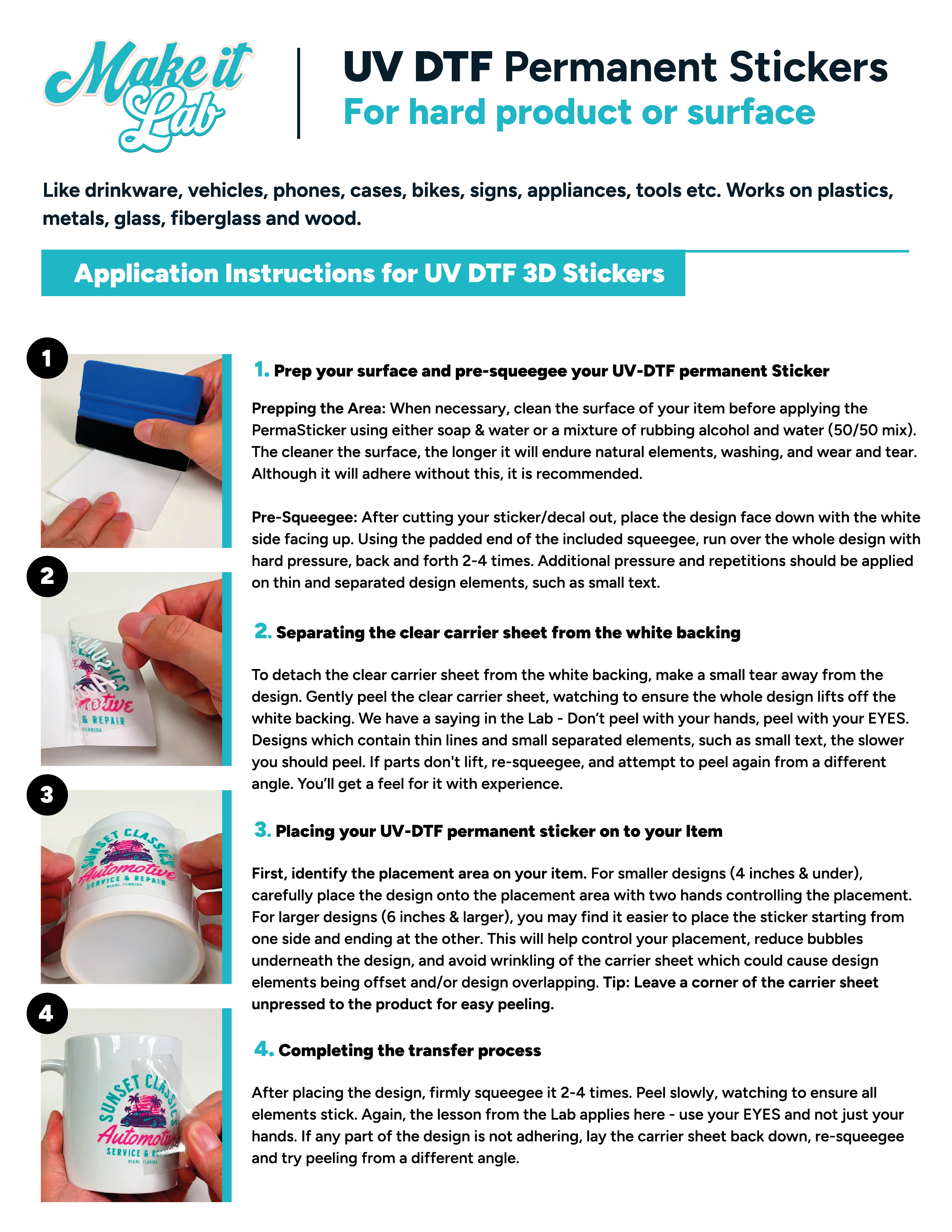


UV Application Instructions
Follow the instructions below to get the perfect Make It Lab results.

Clean the Surface
Wipe the item with alcohol and make sure it is completely dry. Remove any dust, lint, or fingerprints before applying.

Place the Design
Set the transfer where you want it and check the placement carefully. Once it touches the surface, it can be hard to move.

Apply with Pressure
Press the transfer onto the surface from one side to the other with your fingers or with a squeegee to help avoid bubbles or wrinkles.

Remove the Top Film
Peel from an angle the clear film back slowly and carefully. If any part lifts, press it down and rub it in and peel back again. Once all peels just rub in the print.
Frequently Asked Questions
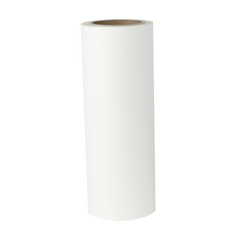
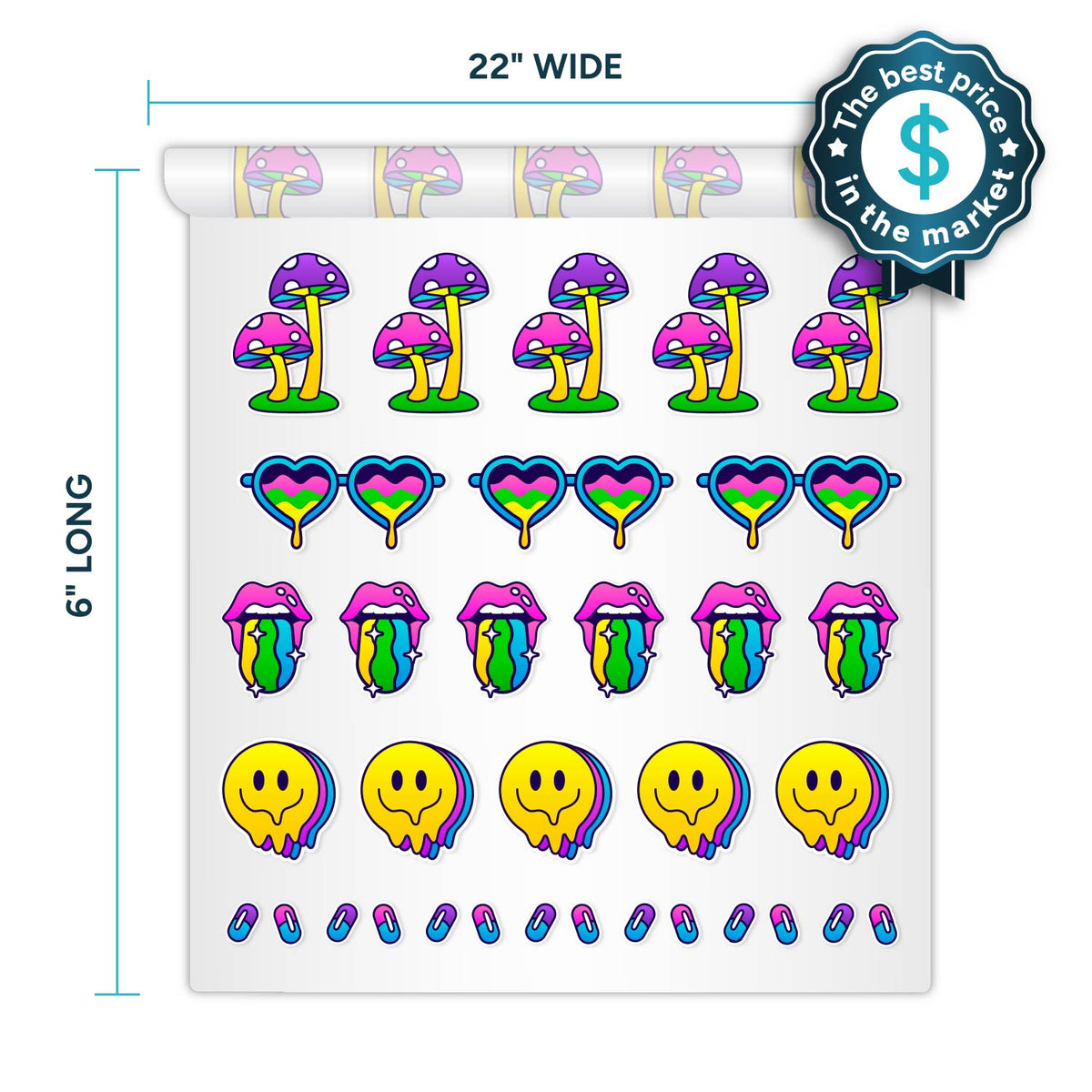
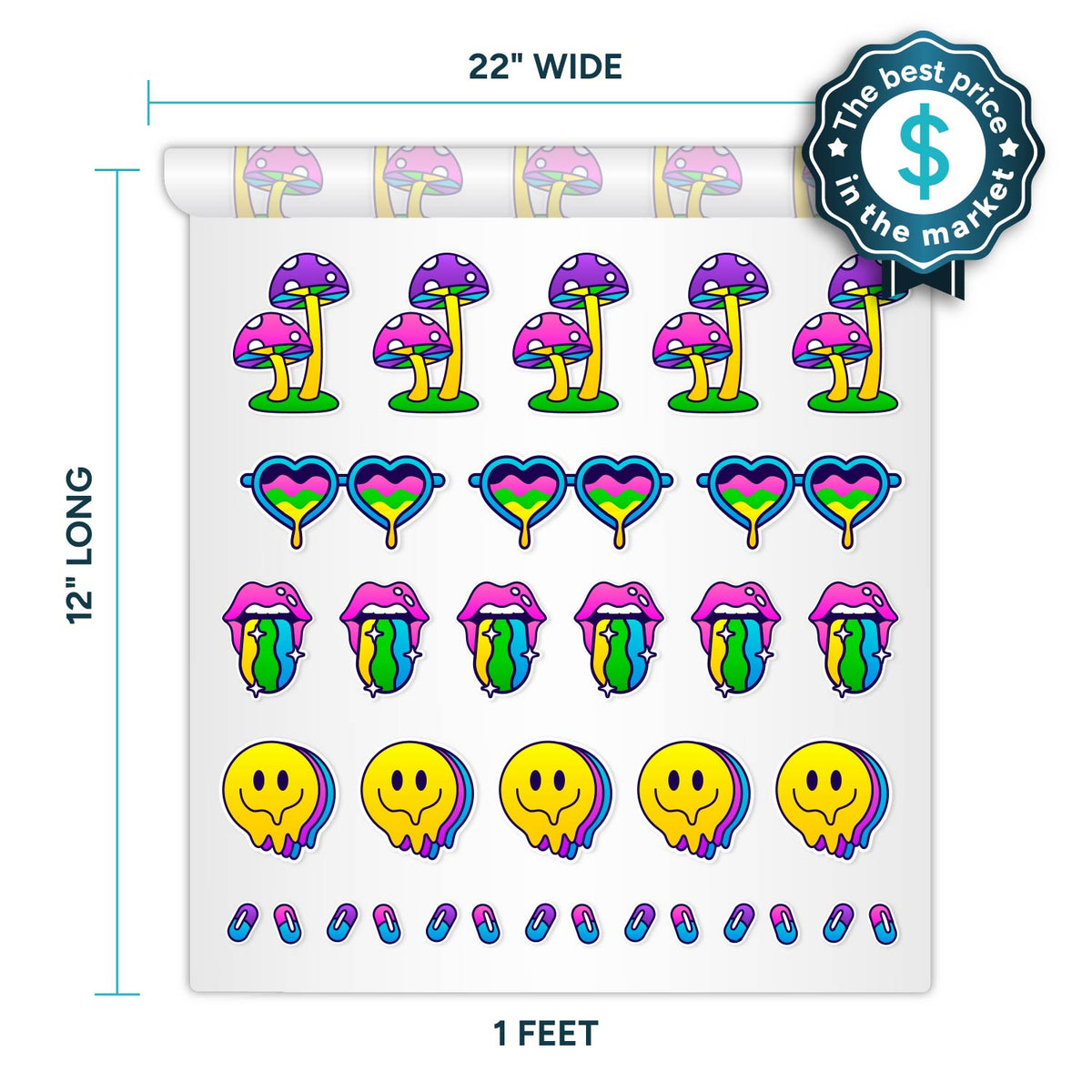
A UV DTF transfer is a high-quality adhesive decal that lets you apply full-color designs onto hard surfaces like mugs, cups, glass, plastic, metal, and more without needing a heat press.
No. UV DTF transfers are pressure-applied, not heat-applied. You just clean the surface, position the design, press it down firmly, and peel away the carrier film.
They work best on smooth, hard, clean surfaces such as ceramic mugs, glass cans, tumblers, plastic, acrylic, metal, and coated wood. Rough or heavily textured surfaces do not work well.
Wipe the surface with alcohol and make sure it is fully dry, dust-free, oil-free, and free of fingerprints. A clean surface is critical for strong adhesion.
Yes, they are generally water-resistant and durable once properly applied. But they still need proper care if you want the design to last as long as possible.
Hand washing is strongly recommended. Some may survive light dishwasher use, but repeated dishwasher cycles can weaken the adhesive and shorten the life of the design.
Not really. Once the adhesive touches the mug and starts bonding, repositioning usually causes stretching, bubbling, or damage. That is why careful placement matters before pressing it down.
It is best to wait at least 24 hours after application before washing or heavy handling so the adhesive can fully bond to the surface.
They can be removed, but usually not cleanly like a reusable sticker. Removal may require scraping, adhesive remover, or heat, and it can damage the decal in the process.
The most common reasons are an unclean surface, applying to a textured surface, poor pressure during application, or peeling the carrier sheet too quickly. Firm burnishing and slow peeling make a big difference.